
Kitchen Lighting Design: Why Lighting Temperature Matters More Than You Think
Choosing the Perfect Warm to Cool Lighting Range
April 25, 2026
When planning a renovation, most homeowners focus on cabinets, countertops, and finishes. But kitchen lighting design projects often come down to one detail that changes everything: lighting temperature.
The difference between warm and cool lighting can completely change how your kitchen looks and feels. It affects colors, textures, and even how comfortable the space is to use daily. That’s why in most of our projects, we carefully stay within the 3000K to 4000K range.
This range gives the perfect balance between warmth and clarity, especially for modern kitchens.
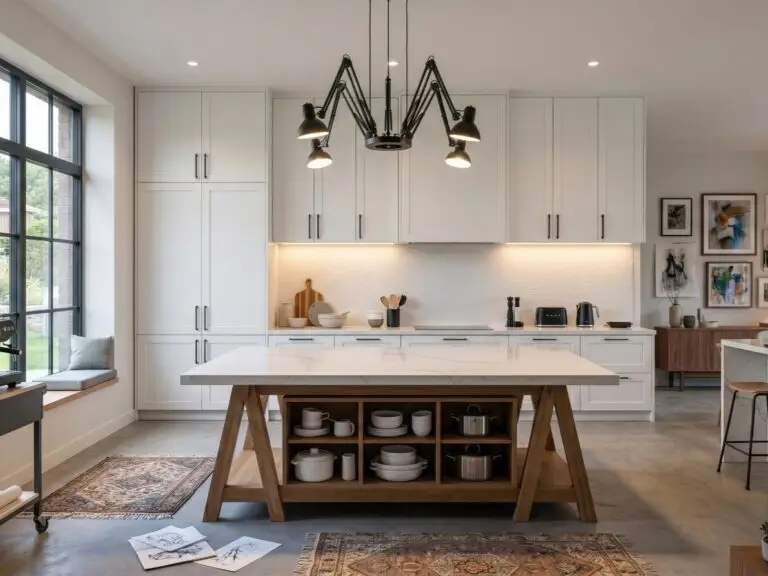
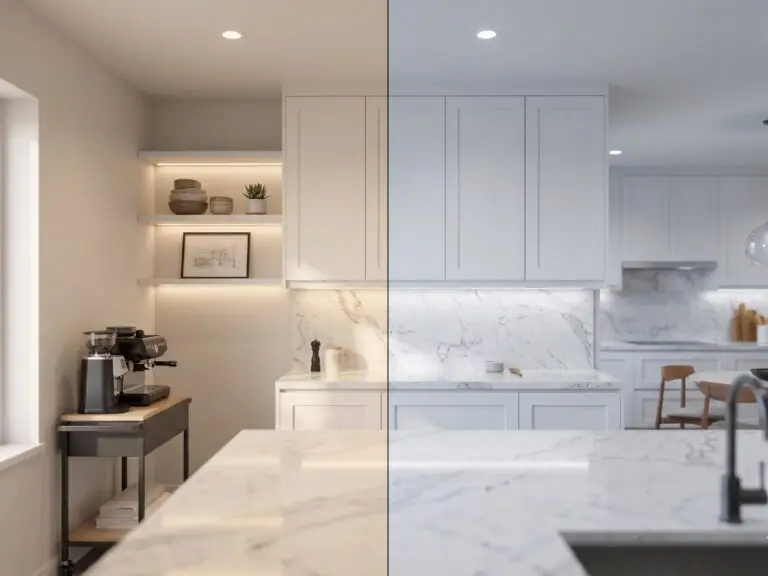
Understanding Kitchen Lighting Temperature (Warm vs Cool Lighting Kitchen)
Lighting temperature is measured in Kelvin (K), and it controls how warm or cool the light appears.
Here’s a simple breakdown:
- 2700K–3000K: Warm yellow tones
- 3000K–3500K: Soft warm white
- 3500K–4000K: Neutral white
- 4000K–5000K+: Cool white to blue tones
In kitchen lighting design, anything too warm can make the space feel dim or yellow, while anything too cool can feel harsh and clinical.
That’s why the sweet spot is usually between 3000K and 4000K.
Why 3000K to 4000K Works Best for Kitchens
Most of our projects use LED lighting for cabinets within this range for a reason.
At 3000K:
- Feels warm and inviting
- Works well with wood tones and warm finishes
- Great for cozy kitchen environments
At 4000K:
- Cleaner and brighter look
- Highlights modern finishes like white cabinets or quartz
- Better for task lighting
By combining both, you get a balanced result that looks great during the day and at night.
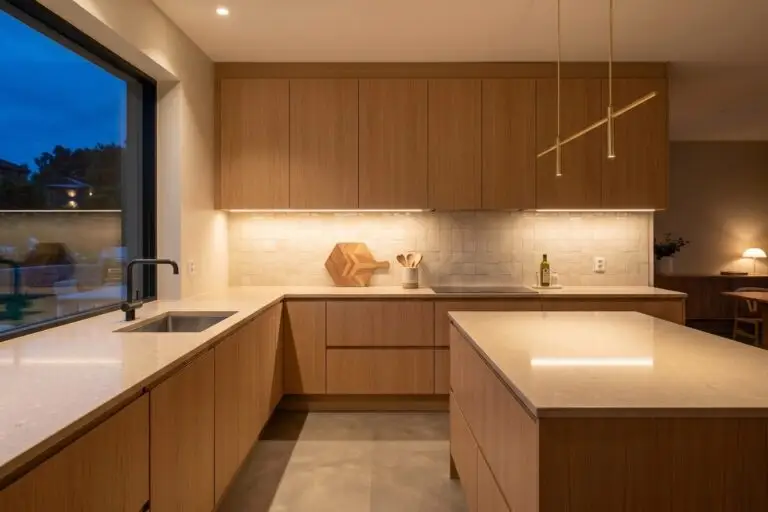
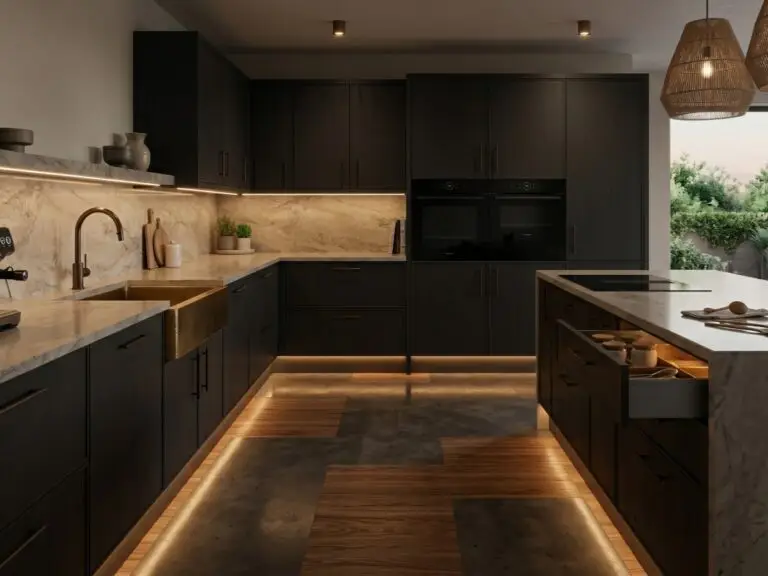
Under Cabinet Lighting Ideas That Actually Work
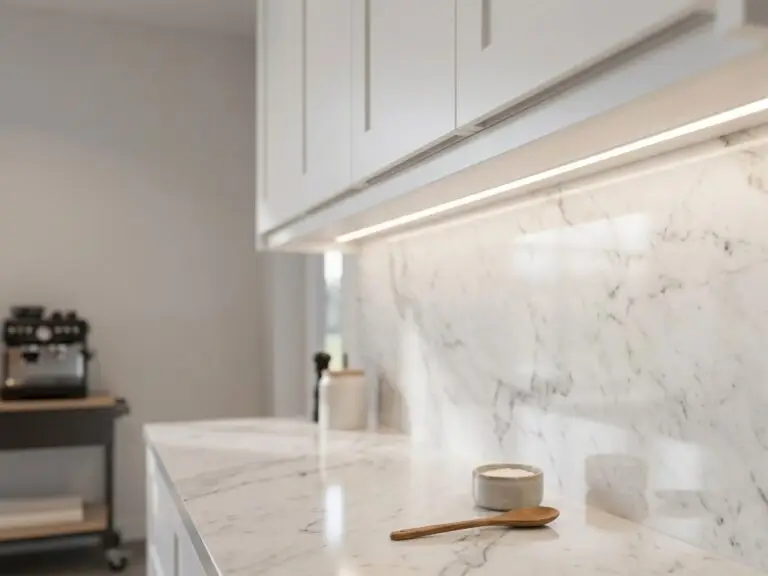
One of the most effective upgrades in any kitchen is under cabinet lighting. It’s a key part of kitchen lighting design projects.
Some practical under cabinet lighting ideas include:
- LED strip lighting under upper cabinets
- Integrated lighting inside glass cabinets
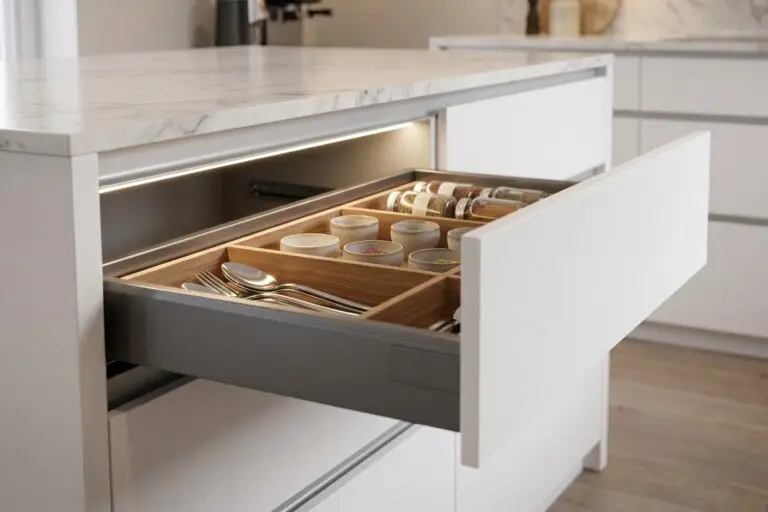
- Lighting inside drawers for visibility
- Toe kick lighting for subtle ambiance
The key is choosing the right temperature. Most of the time, we recommend:
 3000K for a warmer feel 3500K–4000K for a modern clean look
This ensures your countertops and backsplash look exactly how they should.
How Lighting Affects Cabinet Colors and Finishes
Lighting doesn’t just brighten a space. It changes how materials appear.
For example:
- Warm lighting (3000K) enhances wood grain and warm tones
- Neutral lighting (3500K–4000K) keeps whites crisp and clean
- Cool lighting (above 4000K) can make spaces feel sterile
This is why kitchen lighting design needs to be planned alongside cabinetry, not after.
A poorly chosen light temperature can make expensive finishes look completely different than expected.
Choosing the Right Lighting for Your Kitchen Layout
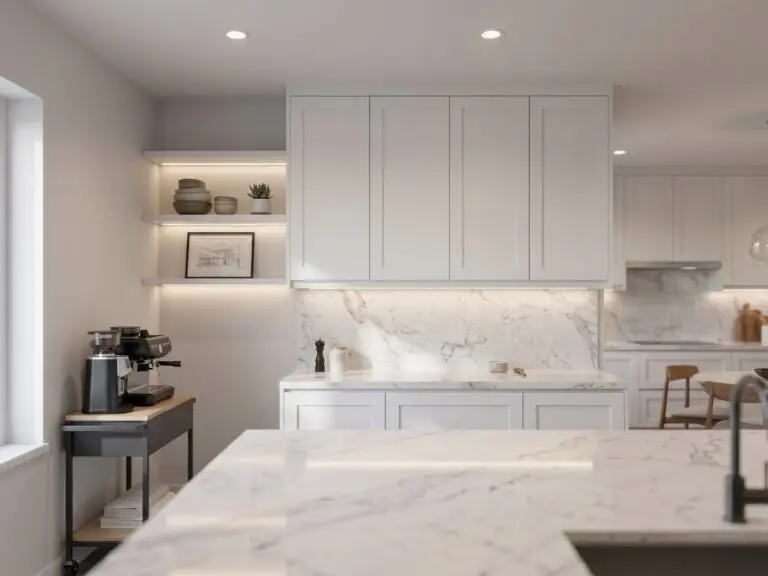
Not every kitchen needs the same lighting setup. The best results come from layering different types of lighting.
General lighting
Ceiling lights that provide overall brightness
Accent lighting
Used for design features like open shelves or wall panels
Task lighting
Under cabinet lighting for prep areas
Combining these layers with the right kitchen lighting temperature creates a space that is both functional and visually appealing.
Real-World Approach We Use in Our Projects
In most of our builds, we follow a simple approach:
- Use 3000K lighting in warmer kitchens with wood or beige tones
- Use 3500K–4000K lighting in modern kitchens with white, black, or grey finishes
- Combine lighting types for better depth and usability
This method keeps the kitchen looking consistent and avoids lighting that feels too yellow or too harsh.
You can also see how we apply lighting in real projects by viewing our recent kitchen renovation projects.
Common Lighting Mistakes to Avoid
If you’re planning a renovation, avoid these common mistakes:
- Choosing lighting without considering cabinet color
- Mixing too many different light temperatures
- Going too cool (above 4000K) in residential kitchens
- Skipping under cabinet lighting
These issues can make even a high-end kitchen feel off.
Final Thoughts on Kitchen Lighting Design
Lighting is one of the most important parts of any kitchen, but it’s often overlooked. A well-planned kitchen lighting design approach can completely transform how your space looks and functions.
Sticking within the 3000K to 4000K range gives you flexibility, balance, and a timeless feel that works in almost any design. To better understand lighting temperature and energy-efficient lighting, Natural Resources Canada provides a helpful overview of how different lighting types perform in residential spaces: https://natural-resources.canada.ca/energy-efficiency
If you’re upgrading your kitchen, don’t treat lighting as an afterthought. It should be part of the design from the beginning. Contact us for your professional kitchen design consultation in GTA.