
7 Signs It’s Time to Replace Your Kitchen Cabinets in Vaughan
When to refinish, repair or replace your kitchen cabinetry
Why Counting Signs Isn’t Enough
The number of signs you spot matters less than what kind they are. Surface wear can often be handled with cabinet refinishing, painting or new doors. Damage to the cabinet boxes, or a layout that no longer fits how you live, usually points to replacement.
Most checklists tell you to count. Three signs? Time to replace. But that’s not how we look at a kitchen.
We’ve been building kitchens for over 18 years. And the first question we ask is simple. Is the problem on the surface, or is it in the box?

Picture two Vaughan homes. The first has faded paint and dated doors. The hinges stick and the handles are worn. That’s four signs, all cosmetic. The boxes are dry and square, the shelves are still flat. Cabinet refinishing or kitchen cabinet door replacement could give that family years more.
The second home has one problem. The sink base got soft from a slow leak nobody caught. The particleboard swelled up and the bottom is starting to crumble. Just one sign. But that one sign tells you the structure has failed.
So how do you tell which kind you’re dealing with? Watch for the signs that matter no matter what the count is.
- Swollen or soft particleboard, usually under the sink or beside the dishwasher
- Boxes pulling away from the wall or from each other
- Shelves that sag and face frames that won’t stay square
- A layout that gets in the way of cooking and storage
- Mould or a musty smell that keeps coming back after cleaning
- Hinge screws that spin in their holes and will not tighten anymore
- Edge banding or laminate peeling away from the box edges
Spot any of these? The count stops mattering. Refacing right over water damage can leave new doors looking great while the box underneath continues to deteriorate.
Here’s a quick test we give homeowners. Grab a flashlight and open the sink base. If there is no visible mould, sharp damage or loose cabinetry, gently check the cabinet floor with your thumb. Avoid disturbing suspected mould or putting weight on a failing cabinet. Firm and flat is good news. Soft or wavy isn’t.
Layout is the sign people underrate most.
Your cabinets can be in decent shape and still be wrong for you. Maybe the pantry is too shallow. Maybe there’s nowhere to put the big pots. Lots of older Vaughan homes have kitchens planned for a different way of living. No paint job fixes a floor plan that doesn’t work. Same footprint, same frustration.
If replacement turns out to be the answer, plan ahead a little. Our custom kitchen cabinets take about 1 to 3 months, depending on scope and the current production schedule. Everything is made to measure in our Concord shop. It’s CNC cut, edge banded and finished in our dust-free spray booth. Nothing gets sent out to another shop.
And if your kitchen only needs a refresh, we’ll tell you that too. Not every kitchen needs new cabinets.
Physical Signs Your Cabinet Boxes Are Failing
Doors and drawer fronts get all the attention. But the box behind them does the real work.
The box is the frame that holds your dishes, your sink and your countertop. If it’s failing, new paint or new doors won’t fix it. You’d be putting a nice face on a weak body.
Most kitchens built in the 1990s and early 2000s used particleboard boxes. Plenty of homes in Maple, Woodbridge and Thornhill still have them. Particleboard holds up fine when it stays dry. Once water gets in, it swells and crumbles. It doesn’t come back.
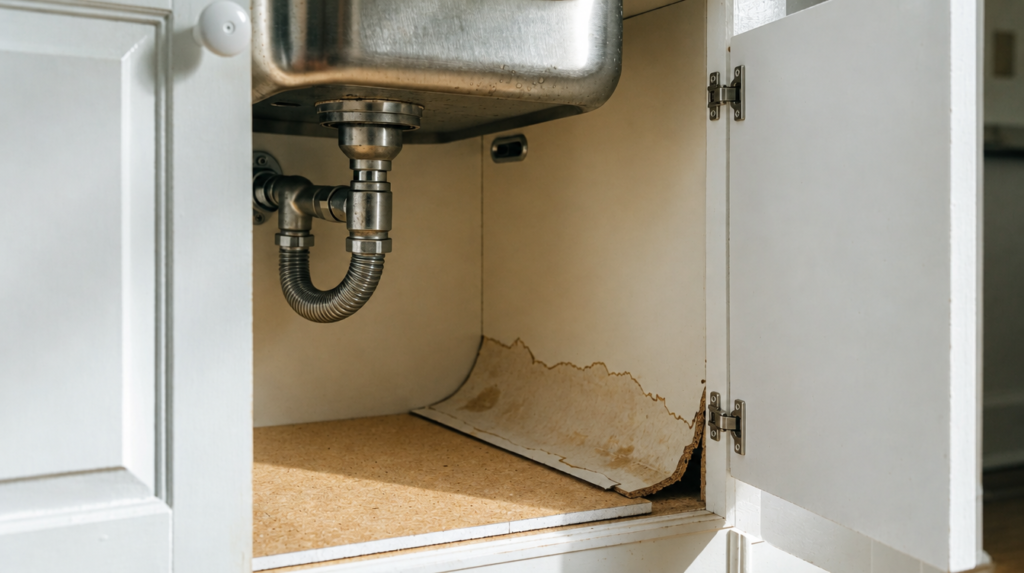
Here’s what to look for when you open your cabinets:
- Swollen or bubbled panels near the sink or dishwasher. Look for edges that look puffy or feel soft.
- A cabinet floor under the sink that flexes when you press on it
- Shelves that bow in the middle, even with only a stack of plates on them
- Edge banding or laminate peeling away from the box edges
- Doors that won’t line up no matter how often you adjust the hinges
- A musty smell inside, or dark spots in the back corners
That last door issue fools a lot of people. They think it’s a hinge problem, so they keep tightening screws. Often the box itself has racked out of square. The hinge is fine, the cabinet is twisted.
Consider this illustrative example.
Imagine a kitchen in Maple where the owner wants new doors. It sounds like a simple job until the sink base is inspected. The floor panel had turned to wet oatmeal from a slow drip that had gone on for years. The dishwasher side panel was swollen two inches up from the bottom. New doors would’ve hung on a box that was falling apart. In that situation, replacing the affected boxes deserves consideration.
Try a quick test of your own. Empty the sink cabinet and press firmly on the floor panel with your palm. Then run your fingers along the bottom edges of the side panels. Does anything feel soft, crumbly or raised? That’s water damage. And it usually goes deeper than what you can see.
Vaughan’s humid summers don’t help. Neither do dry furnace winters. Boxes with poor edge sealing take on moisture in July and shrink in January. Over enough seasons, joints loosen and the glue lets go. Some homeowners shim the doors, some add brackets, some just live with it.
None of those fixes the box.
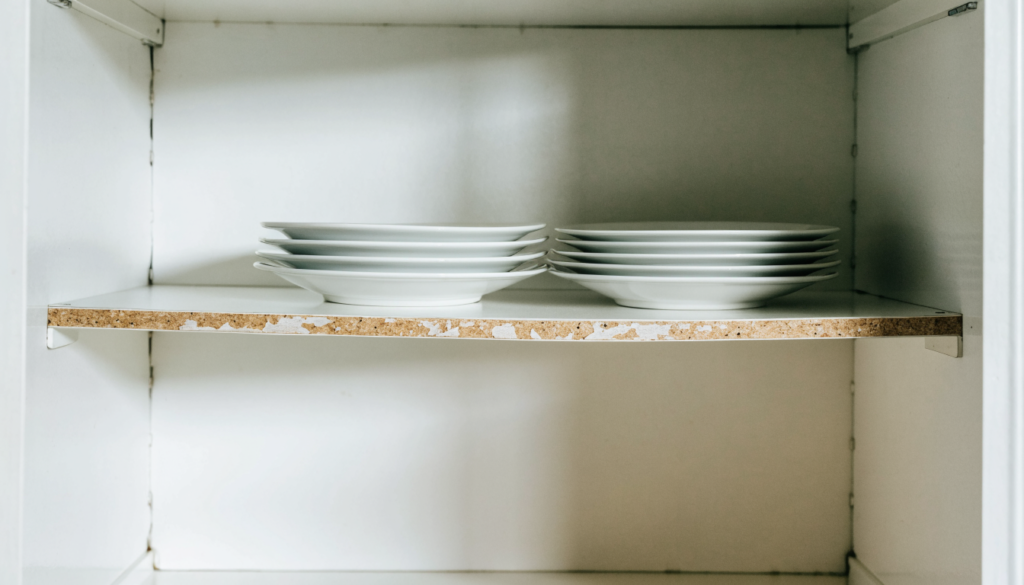
When we build replacement boxes, they’re made to measure in our own shop in Concord. Every panel is CNC cut so the box goes together square. Then every exposed edge is sealed with edge banding before finishing. That sealed edge helps protect the core from moisture; it does not make the cabinet waterproof. We build the same way for bathrooms. Our custom vanities and closets take a beating from steam and daily use, so the boxes get the same care.
Not every soft spot means a full tear-out. Sometimes one sink base can be rebuilt and the rest of the kitchen is solid. The only way to know is to look closely at each box.
Functional and Hidden Signs Homeowners Often Miss
Some signs are easy to spot. Peeling paint, dated doors, a worn finish. But the signs that matter most often hide behind the doors or under the sink.
We open a lot of cabinets on in-home visits around Vaughan. The problems we find usually aren’t the ones the homeowner called about. They’re the quiet ones that have been building for years.
Here’s what we check first when we walk into a kitchen. Grab a flashlight and look for these yourself.
- Soft or swollen panels under the sink, where particleboard has soaked up water and puffed out
- A musty smell when you open a lower door, even right after cleaning
- Shelves that bow in the middle under the weight of dishes
- Hinge screws that spin in their holes and won’t tighten anymore
- Gaps opening up where the cabinet box meets the wall or countertop
One of these alone might be a simple cabinet repair. Two or three together usually point to a box that’s failing.
Water damage is the big one. A slow drip from a dishwasher line can sit for months before anyone notices. By then the bottom panel has lost its strength, mould may be growing behind the back panel too. And paint won’t fix that. Neither will new doors.
Refacing a cabinet with a rotten box is like putting new tires on a broken frame.
A quick test we show people: press down firmly on the floor of your sink cabinet. If it flexes or feels spongy, the box is compromised. Most people don’t realize this until a plumber points it out.
Vaughan’s seasons don’t help either. Dry furnace heat in winter and humid summers make wood and cheap board swell and shrink. Over 20 or 30 years that movement loosens every joint. Doors drift out of line. Drawers drag or drop off their slides.
Lots of homes in Maple and Woodbridge built in the late ’80s and ’90s still have their original builder-grade cabinets. Those boxes were made to a budget. Thin particleboard, paper-thin edges, stapled drawer boxes. They’ve done their job, but they’re near the end of it.
Then there are the signs that have nothing to do with damage. Your cabinets might be solid and still not work for you. Do you stack pots three deep just to close the door? Is there a corner cabinet you haven’t opened since you moved in?
For another illustrative example, picture a family in Woodbridge whose cabinets are in fine shape. But the layout was built for someone with a kettle and a toaster. They had an air fryer, a stand mixer and a coffee machine with nowhere to put any of it. The counters were always full.
Redesigning the run with deep drawers and a tall pantry cabinet could address those storage problems. Same footprint. A completely different kitchen to cook in.
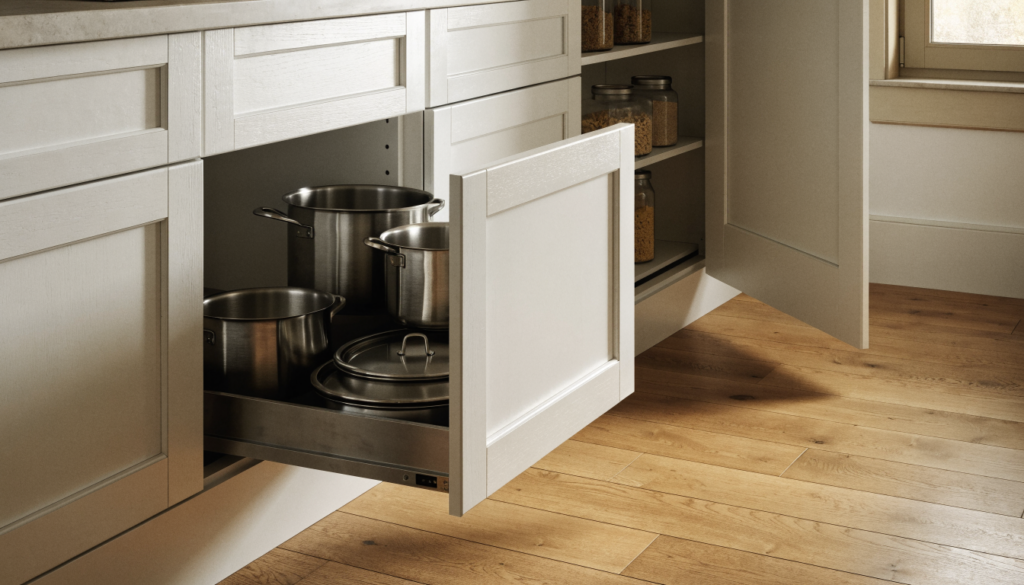
That’s the part a coat of paint can’t solve. When we build replacement custom kitchen cabinets, every box is made to measure, CNC cut and edge banded in our own shop in Concord. That sealed edge helps protect the core from moisture. So the new boxes hold up to the same sink and the same seasons that wore out the old ones.
Book a consultation with William
Frequently Asked Questions
What are the main signs that it’s time to replace kitchen cabinets instead of fixing them?
The main signs are swollen particleboard, boxes pulling away from the wall, sagging shelves, and a musty smell that keeps returning. These point to structural failure, not just a dated look. Cosmetic issues like worn hinges or faded paint can often be fixed with refinishing. Press on the cabinet floor under your sink with your thumb. If it feels soft or wavy, the box has failed. That’s when replacement makes more sense than a surface fix.
How do I know if my cabinet problem is cosmetic or structural?
Check whether the damage is on the surface or inside the box. Faded doors, loose handles, and sticking hinges are usually cosmetic and fixable with refinishing. Soft wood, bulging panels, or shelves that bow in the middle mean the box itself is failing. Grab a flashlight, open the sink base, and press on the floor panel. Firm and flat means you’re likely fine. Soft or crumbly means the structure needs attention before anything else.
Why do so many Vaughan kitchens from the 1990s have cabinet problems?
Many kitchens built in Vaughan during the 1990s and early 2000s used particleboard boxes, which are common in homes across Maple, Woodbridge, and Thornhill. Particleboard holds up fine as long as it stays dry. Vaughan’s humid summers and dry furnace winters cause boxes to take on moisture, then shrink again each season. Over time this weakens glue joints and causes panels to swell near the sink or dishwasher, especially in older builds with poor edge sealing.
Can I just reface my cabinets instead of replacing the whole box?
Refacing works well when the boxes are dry, square, and structurally sound, but it’s a mistake to reface over hidden water damage. New doors and panels look great, but if the box underneath is soft or swollen, the problem keeps growing behind the fresh finish. Always check the sink base and dishwasher side panel first. If those are solid, refacing can save years of life. If not, the boxes need replacing before any cosmetic work happens.
Is a layout problem a real reason to replace cabinets, even if they look fine?
Yes, a layout that doesn’t fit how you cook and store food is a real reason to replace cabinets. Many older Vaughan homes were designed for a different way of living, with shallow pantries or no space for larger pots. No amount of paint or new doors fixes a floor plan that works against you every day. If this sounds familiar, our cabinetry team can walk through layout options that solve the problem for good.
How long does it take to replace kitchen cabinets once I’ve decided to move forward?
Custom kitchen cabinets typically take about one to three months, depending on the size of the project. Everything is made to measure, CNC cut for square joints, edge banded to seal out moisture, and finished in a dust-free spray booth. Nothing gets outsourced to another shop, which keeps quality consistent from panel to panel. Planning ahead for this timeline helps you avoid rushing a decision between refinishing and full replacement.