
Kitchen Cabinetry Styles: Modern, Transitional, or Classic?
Find Your Ideal Look
June 23, 2026
When designing a custom kitchen, kitchen cabinetry styles serve as the architectural foundation of the space. Your choice of door profile, wood species, moulding, hardware, and finish sets the tone for the entire home.
While interior trends evolve, three core kitchen cabinetry styles remain timeless: modern, transitional, and classic. Understanding the key millwork details of each style will help you select custom cabinetry that aligns with your design vision, lifestyle, and home.
At William Millwork, we help homeowners create kitchens that are not only beautiful but also practical, durable, and built around the way they live every day.
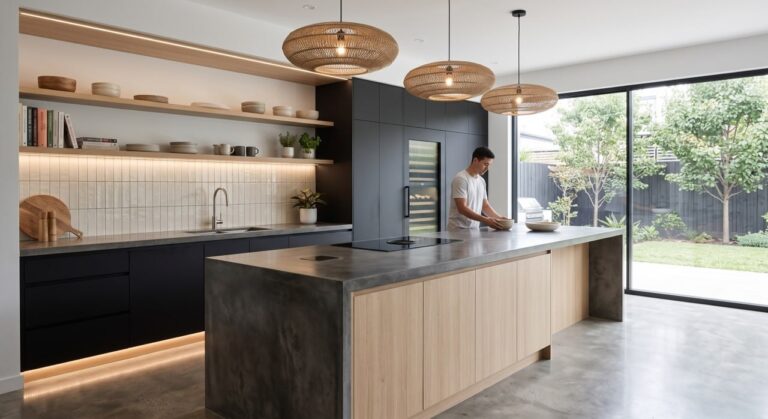
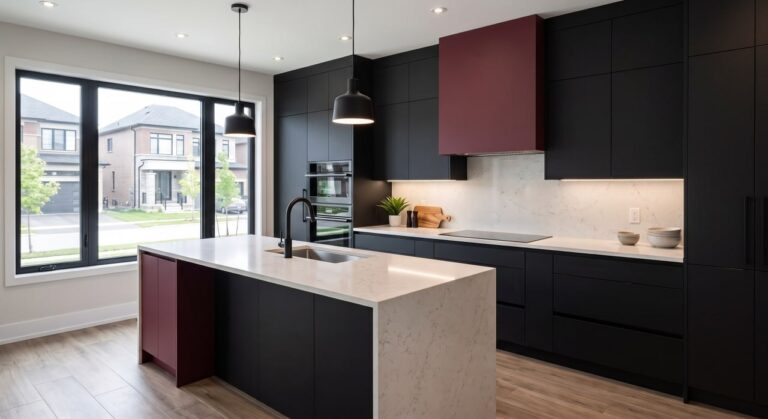
Modern Kitchen Cabinetry Styles: Sleek, Minimalist, and Streamlined
Modern kitchen design emphasizes minimalism, clean lines, and unadorned surfaces. In modern millwork, functionality and material beauty take center stage rather than decorative carving or heavy moldings.
Door Profiles
Modern kitchens often use full overlay or frameless construction featuring slab doors, also known as flat-panel doors. These doors create a completely smooth, flat surface without bevels, raised panels, or extra detailing.
This is one of the most popular kitchen cabinetry styles for homeowners who want a clean and architectural look.
Millwork Details
Precision is critical in modern millwork. Cabinetry often features grain-matched wood veneers, where the natural grain of the wood flows continuously across multiple cabinet doors and drawer fronts.
This creates a refined, seamless appearance that feels intentional and high-end.
Hardware and Hardwareless Systems
Modern cabinetry often uses integrated J-pull handles, push-to-open touch latches, or minimalist channel pulls. These systems keep surfaces flush and clutter-free.
For homeowners who prefer a very clean look, handleless cabinetry is one of the strongest features of modern kitchen design.
Finishes
Common finishes include matte lacquers, high-gloss lacquers, dark painted finishes like charcoal or deep black, and warm natural woods such as quarter-sawn white oak or walnut.
Modern kitchen cabinets are ideal for homes that lean toward a sleek, simple, and uncluttered aesthetic.
Classic Kitchen Cabinetry Styles: Elegant, Detailed, and Timeless
Classic kitchens, sometimes called traditional kitchens, draw inspiration from historic European and early American architecture. This style prioritizes craftsmanship, intricate detail, proportion, and rich architectural features.
Door Profiles
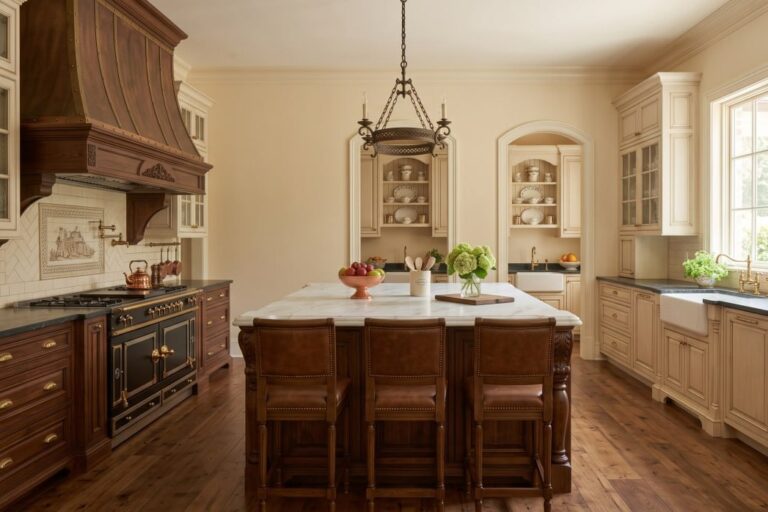
Classic kitchens often use inset or face-frame cabinetry with raised-panel doors or detailed frame-and-panel designs. Beaded inset doors are also common in this style.
These details give the cabinetry more depth and help create a timeless, furniture-like appearance.
Millwork Details
Extensive architectural trim is a hallmark of classic design. Expect multi-tiered crown molding running to the ceiling, decorative corbels supporting islands or range hoods, pilasters, turned legs, and custom-built mantels over the cooking area.
Among all kitchen cabinetry styles, classic kitchens tend to have the most detailed millwork.
Hardware
Classic cabinetry often features substantial, ornate hardware made from traditional metals such as antiqued brass, oil-rubbed bronze, or polished nickel.
The hardware is not just functional. It becomes part of the overall design statement.
Finishes
Finishes often include richly stained hardwoods such as walnut, cherry, or mahogany. These woods highlight natural grain and create a warm, elegant feeling.
Classic kitchens may also include warm antique white paint with subtle hand-applied glazes or light distressing for a more traditional appearance.
Classic kitchen cabinets are best for homeowners who want a rich, elegant, and historically inspired space.
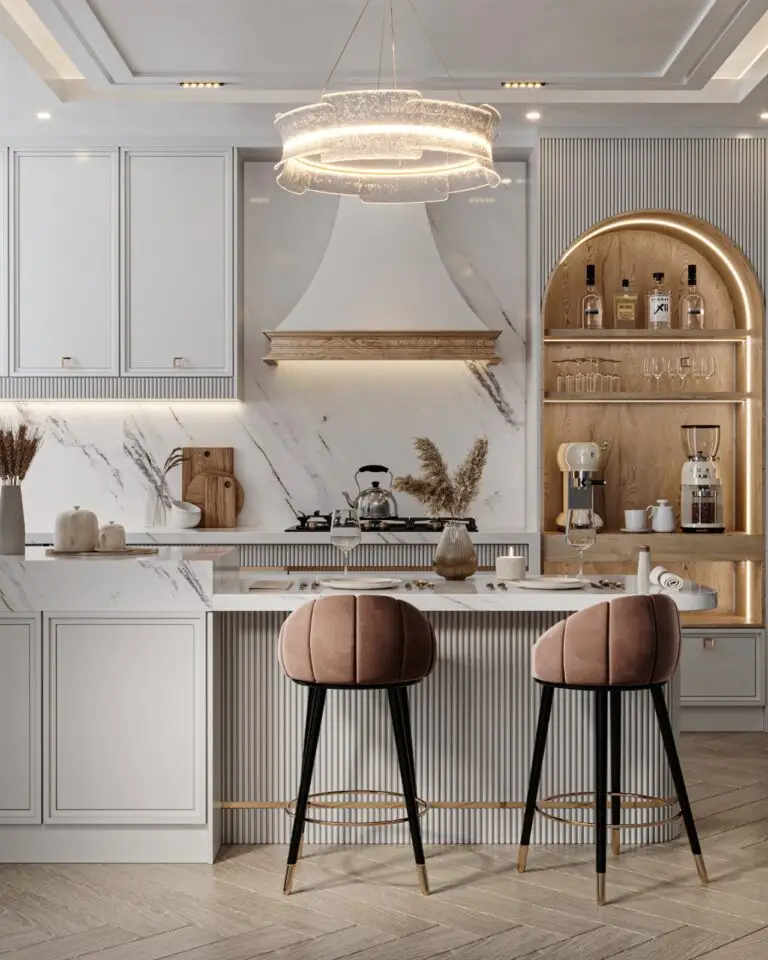
Transitional Kitchen Cabinetry Styles: The Perfect Balance
Transitional kitchens bridge the gap between modern and classic styles. By combining the clean lines of contemporary design with the warmth and texture of traditional millwork, transitional kitchens offer a balanced look that works well in many homes.
This is one of the most requested kitchen cabinetry styles because it feels clean, welcoming, and timeless without being too plain or too ornate.
Door Profiles
The cornerstone of transitional kitchen cabinets is the shaker-style door. This door has a simple recessed center panel with a clean four-piece frame.
A modified shaker door with subtle chamfered edges is also common for homeowners who want a slightly more detailed look.
Millwork Details
Trim work is present but restrained. Crown moldings are tailored rather than ornate, avoiding complex carving in favor of simple and elegant profiles.
Open shelving paired with closed cabinetry is also common in transitional kitchens. This adds visual interest while keeping the space practical.
Hardware
Transitional kitchens allow for versatile hardware options. Popular choices include classic cup pulls, sleek bar handles, and simple round knobs.
Common finishes include brushed brass, matte black, polished chrome, and brushed nickel.
Finishes
Painted cabinets in soft neutrals are very common. These may include crisp whites, warm greys, muted greens, or deep navy.
Natural wood accents are also popular, such as a stained oak island paired with painted perimeter cabinetry.
Transitional kitchen cabinets are ideal for homeowners who want a balanced, flexible, and welcoming kitchen design.
Kitchen Style Comparison Guide
Here is a simple breakdown of the three main kitchen cabinetry styles:
| Feature | Modern | Transitional | Classic |
|---|---|---|---|
| Door Profile | Slab or flat-panel | Shaker or simple recessed panel | Raised panel or beaded inset |
| Molding Style | Minimal or flush shadow-lines | Simple tailored crown molding | Layered crown, corbels, and pilasters |
| Common Finishes | Grain-matched veneer, matte lacquer | Painted neutrals, warm oak stains | Stained hardwoods, antique painted glazes |
| Hardware | Touch-latch, integrated channels, minimalist pulls | Brushed metal pulls, simple knobs | Antique brass, detailed knobs and handles |
| Overall Aesthetic | Sleek, architectural, clutter-free | Balanced, versatile, welcoming | Rich, elegant, historically inspired |
Which Kitchen Cabinetry Style Is Right for You?
The best cabinetry style depends on your home, your lifestyle, and the feeling you want your kitchen to create.
Choose modern kitchen cabinets if you prefer clean lines, flat surfaces, minimal hardware, and a sleek architectural look.
Choose classic kitchen cabinets if you love rich detail, crown moulding, decorative trim, and timeless craftsmanship.
Choose transitional kitchen cabinets if you want a balanced style that feels clean but still warm, detailed, and welcoming.
For many homeowners, transitional cabinetry is the safest long-term choice because it blends well with both modern and traditional interiors.
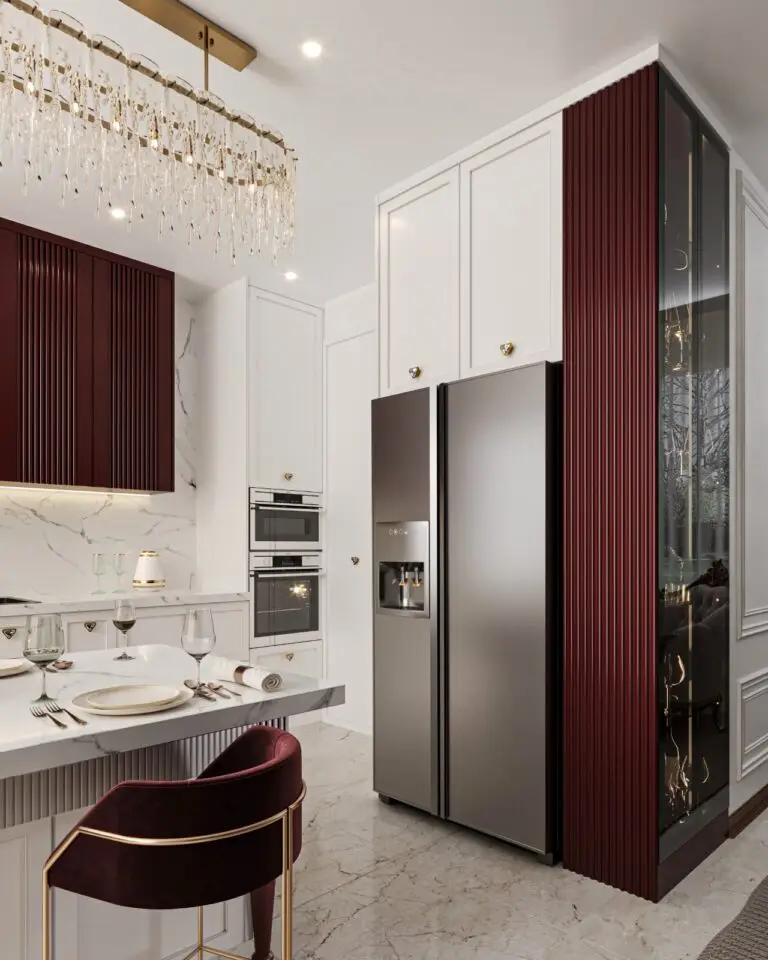
Bringing Your Vision to Life with Custom Kitchen Cabinetry
Whether you prefer the crisp architectural lines of a modern kitchen, the rich heritage of classic millwork, or the balanced warmth of a transitional space, custom kitchen cabinetry ensures your kitchen is built to exact specifications and proportioned precisely to your home.
At William Millwork, every cabinet, panel, drawer, and piece of moulding is crafted with care, quality materials, and precise attention to detail.
A custom kitchen is not just about choosing a colour or door profile. It is about creating a space that works beautifully, feels personal, and lasts for years.
If you are planning a kitchen renovation, our team can help you compare different kitchen cabinetry styles and select the right design direction for your home.